Dear Readers,
I hope you are doing well.
In this post, I will discuss OCI Oracle Database automatic backups using Autonomous Recovery Service (ARS) or Zero Data Loss Recovery Service (ZRCV).
For OCI Oracle Database workloads, Autonomous Recovery Service is generally the preferred backup destination for production databases where recovery point objective (RPO), ransomware resilience, and reliable recovery are critical. It provides the same Oracle-managed automatic backup experience as the traditional Object Storage option, while adding Recovery Appliance technology, centralized protection-policy management, immutable backup protection, continuous backup validation, and—when Real-Time Protection is enabled—near-zero data-loss capability.
Options for automatic backups for Oracle Databses on OCI:
OCI automatic backups are Oracle-managed backup jobs. After enabling automatic backups, the administrator selects a retention policy and backup destination.
Before enabling ARS, confirm that the database compatible parameter is set to 19 or later for applicable environments. Databases that do not meet the ARS prerequisites can continue to use automatic backups with Object Storage.
The primary automatic-backup destinations and capabilities are as follows:
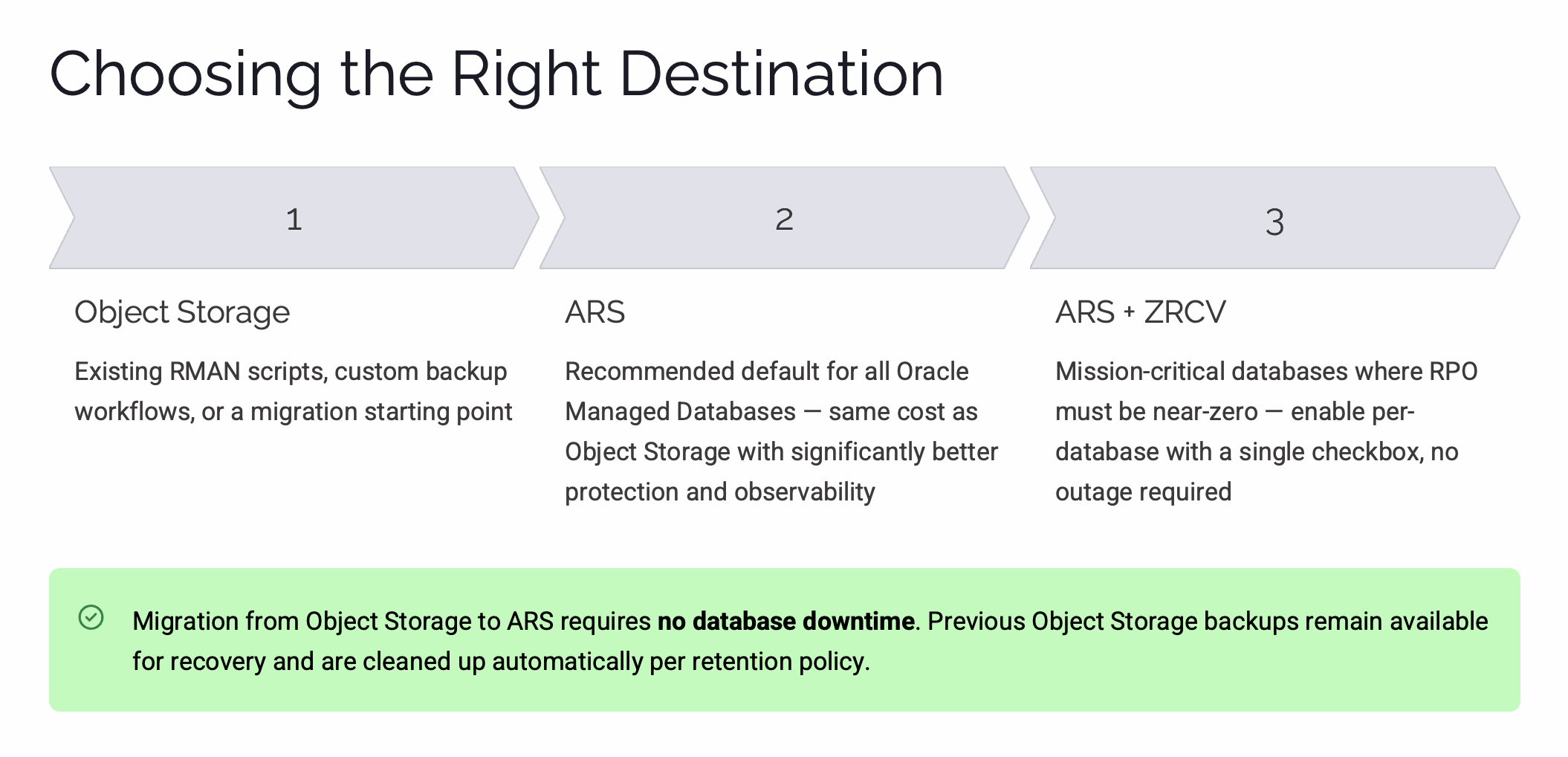
It is important to note that ZRCV is not a separate backup destination from ARS. Rather, it commonly refers to ARS when its Zero Data Loss capability, delivered through Real-Time Protection, is enabled.
These all options are available in OCI as well as Multicloud offerings through Azure, Google Cloud and AWS.
Methodology:
All of these backup options support Oracle-managed automatic backups. Selecting Autonomous Recovery Service does not replace or disable automatic backups; it changes the destination and enhances the way backups are protected, validated, and managed.
With Object Storage as the destination, OCI automatically creates periodic level 0 backups, daily level 1 incremental backups, and archived redo log backups. The potential data-loss window depends on the most recent usable archived redo log backup and the specific recovery scenario.
In contrast, Autonomous Recovery Service uses the Recovery Appliance’s incremental-forever backup model, which reduces the need for recurring full backups from the production database. When Real-Time Protection is enabled, ARS can also continuously receive redo changes, providing a recovery point close to the time of a failure or ransomware incident.
Backup Retention Policies in ARS/ZRCV:
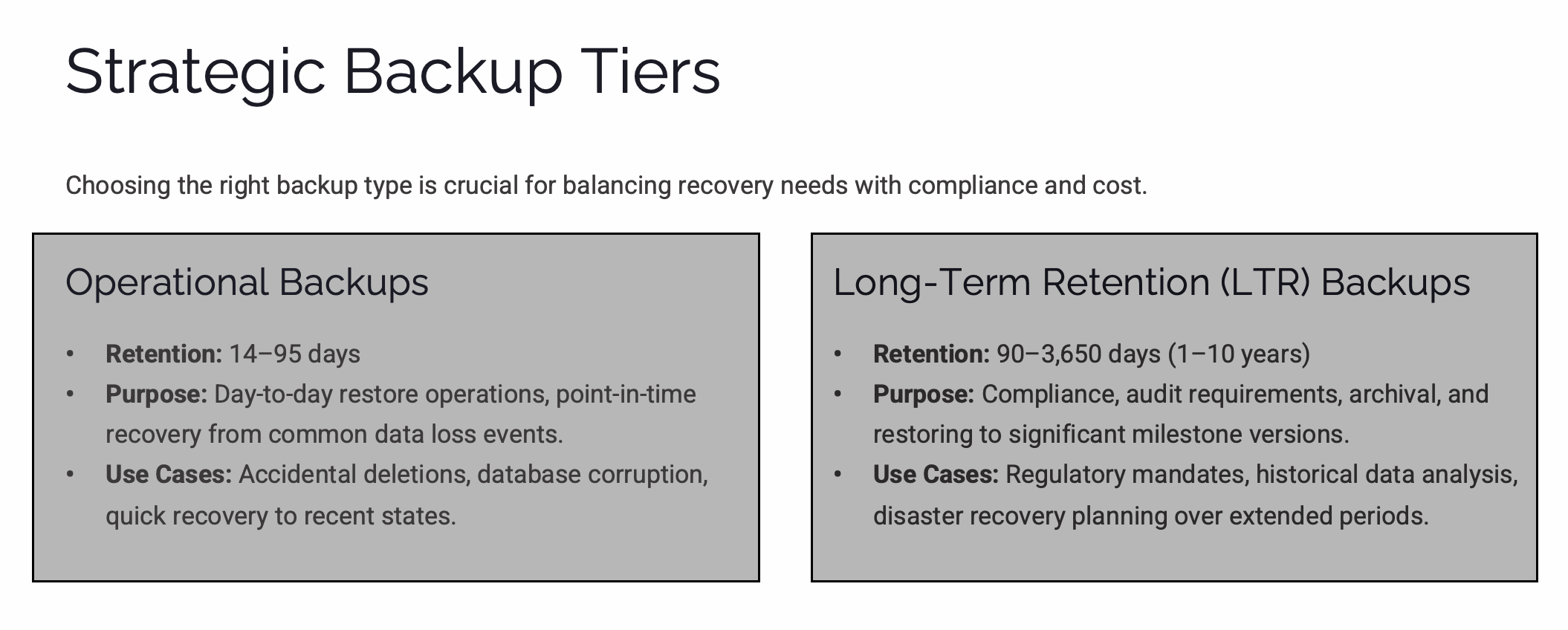
Autonomous Recovery Service (ARS/ZRCV) provides two retention models: operational backup retention for routine recovery and Long-Term Retention (LTR) for compliance, audit, and archival requirements.
- Operational backup retention
Each protected database is associated with one ARS protection policy. This policy determines how long automatic operational backups remain available for recovery.
Oracle provides the following default policies:
| Policy | Retention |
|---|---|
| Bronze | 14 days |
| Silver | 35 days — default |
| Gold | 65 days |
| Platinum | 95 days |
Custom protection policies can also be created with a retention period from 14 to 95 days.
Once the retention period expires, ARS automatically removes the associated operational recovery points. Operational retention policies do not affect LTR backups.
- Long-Term Retention backups
LTR backups are created on demand from an existing operational recovery point and retained independently of the operational protection policy. ARS does not require a new full production backup to create an LTR copy.
Key LTR characteristics include:
- Retention from 90 to 3,650 days, or 1 to 10 years.
- Storage in the Object Storage Infrequent Access tier.
- Immutable lifecycle management.
- Restore support by creating a new database; in-place restore is not supported.
- Independent retention even after normal operational backups expire.
For example, a production database can use the Silver policy for 35-day operational recovery while retaining a year-end LTR backup for seven years.
- Retention after database termination
When terminating a database, select the backup-deletion option carefully:
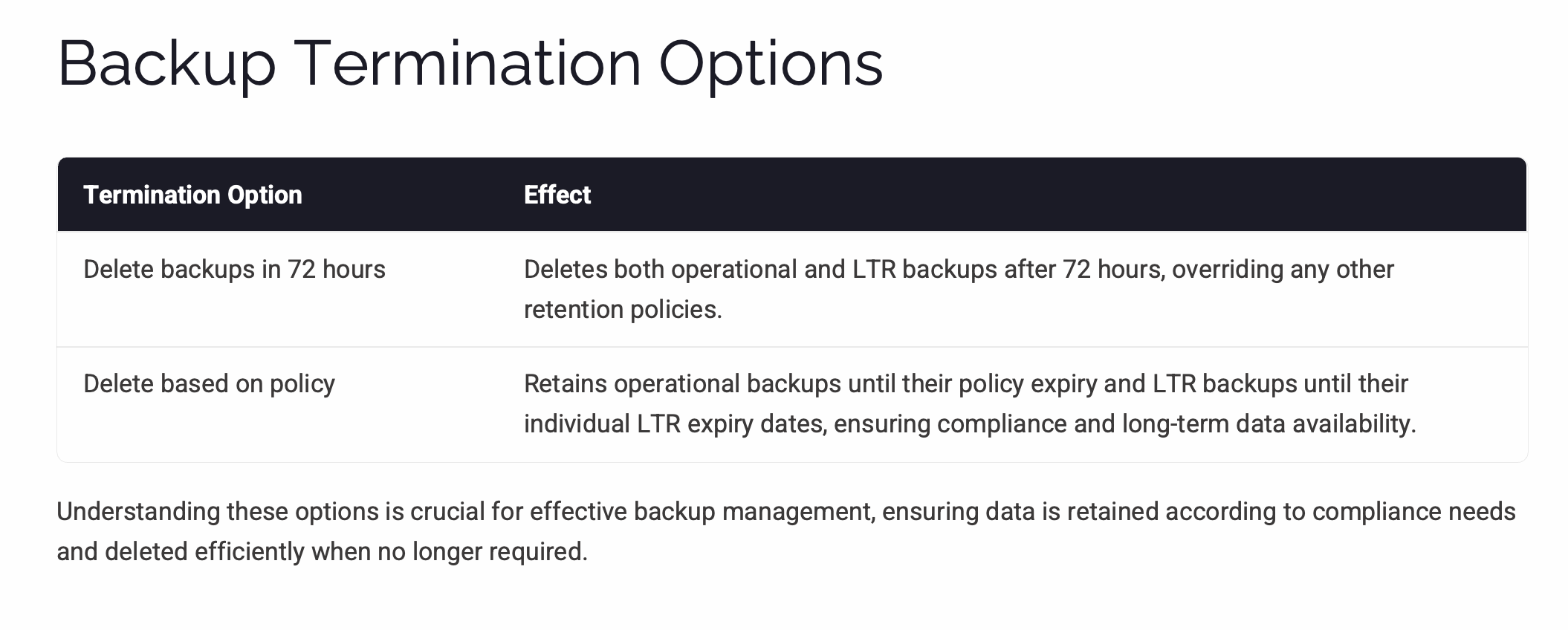
For databases subject to audit, compliance, or long-term retention requirements, select Delete based on policy.
Why ARS/ZRCV Is Better for Most Production Databases:
- Near-zero RPO with Real-Time Protection
With Real-Time Protection enabled, ARS continuously transfers redo changes to the Recovery Service. This enables recovery to within seconds of a failure or ransomware event.
Object Storage backups rely on scheduled backups and archived redo-log transfers. Any changes made after the last usable redo backup may be lost. Real-Time Protection is an optional premium ARS feature and is intended for workloads where minimal data loss is critical.
- Lower backup impact on production databases
Traditional backups require periodic level 0 or full backups, which consume database CPU, memory, I/O, and time.
ARS uses an incremental-forever model. It creates recovery-ready virtual full backups from incremental changes, reducing the need for recurring full backups on the production database. This shortens backup windows and reduces resource overhead, although network capacity and ARS subnet connectivity must still be planned.
- Greater recovery assurance
ARS continuously validates backups to identify issues that could affect recovery. It provides assurance that a usable recovery point exists—not simply that a backup job completed successfully.
Backups are encrypted and immutable, helping protect recovery copies from accidental deletion, compromised accounts, and ransomware attacks.
- Long-term retention without a new full backup
ARS supports immutable Long-Term Retention (LTR) backups for up to 10 years. LTR backups are created from existing operational recovery points, avoiding a separate full production backup.
They are retained independently of normal backup retention and are ideal for compliance, audit, and archival requirements.
Important MOS reference document:
Autonomous Recovery Service Backup known issues KB858914
Recommendation and Conclusion
For OCI production Oracle databases, enable automatic backups and select Autonomous Recovery Service (ARS) as the backup destination.
Enable Real-Time Protection(RTRT) for business-critical workloads that require a near-zero RPO or strong protection against ransomware and data corruption. Even without Real-Time Protection, ARS provides lower production backup overhead, continuous validation, immutable backup protection, and centralized fleet-level management. Oracle documents that baseline ARS backup cost is the same as Object Storage backups.
Object Storage remains a suitable option for workloads with a simpler backup requirement and an acceptable scheduled-backup RPO.
The final decision should be based on recovery objectives, ransomware resilience, operational scale, and ARS eligibility—not on the misconception that automatic backups and ARS are separate or mutually exclusive options.
Let me know for any questions and any further information in comments or LinkedIn.
Regards
Adityanath.


Leave a Reply